
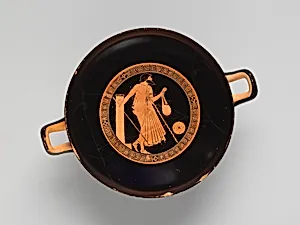
Terracotta kylix (drinking cup)
ca. 490–480 BCE
Medium
Terracotta
Dimensions
Overall: 3 7/16 x 11in. (8.8 x 28cm)
Classification
Vases
Culture & Period
Greek, Attic · Classical
Department
Greek and Roman Art
Museum
Metropolitan Museum of Art, New York, NY
Credit
Purchase, Christos G. Bastis Gift, 1958
Accession Number
58.11.4
Rights
Public Domain
Art Historical Context
Step into the lively world of ancient Athens with this exquisite terracotta kylix, a drinking cup crafted by the Brygos Painter around 490–480 BCE. Hailing from Attic Greece during the early Classical period, this 3 7/16 x 11-inch (8.8 x 28 cm) vessel the red-figure technique, where artists painted figures in the natural red clay and incised details with black slip. The Brygos Painter, named after the potter Brygos whose signature appears on some works, was renowned for his dynamic compositions and spirited scenes, often capturing the revelry of symposia—elite male drinking parties central to Greek social life. Kylikes like this one were not just functional but artistic showpieces, held low to the lips during toasts, revealing intricate decorations on the interior tondo (circular base) and exterior. The Brygos Painter's innovative style bridged Archaic exuberance and Classical restraint, with fluid lines and expressive figures that brought myths and daily life vividly to pottery. This piece, acquired by the Metropolitan Museum of Art in 1958 through the Christos G. Bastis Gift, highlights Attic vase-painting's peak, when Athens dominated the Mediterranean art trade. Imagine sipping wine from this very cup amid philosophical debates or poetic recitals— a tangible link to the intellectual birthplace of Western culture!
About the Artist
Brygos Painter
The Brygos Painter is one of the most gifted and prolific red-figure vase painters of ancient Athens, active in the early fifth century BCE during one of the most dynamic periods of Greek artistic development. Like most ancient Greek vase painters, he is known to us not by his personal name but by a conventional scholarly designation — in this case derived from the potter Brygos, whose name appear...