
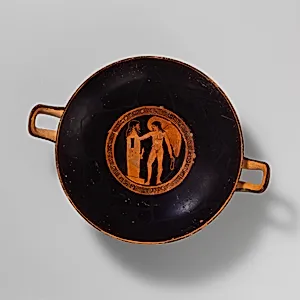
Terracotta kylix (drinking cup)
mid-5th century BCE
Medium
Terracotta
Dimensions
width 11 3/4in. (29.9cm); diameter 9in. (22.9cm)
Classification
Vases
Culture & Period
Greek, Attic · Classical
Department
Greek and Roman Art
Museum
Metropolitan Museum of Art, New York, NY
Credit
Gift of Ernest Brummer, 1957
Accession Number
57.12.21
Rights
Public Domain
Tags
Art Historical Context
This elegant terracotta kylix, created in Athens during the mid-fifth century BCE, exemplifies the refined artistry of Classical Greek pottery. As a shallow drinking cup with a wide bowl and horizontal handles, it was designed for use at symposia—lively male drinking gatherings where wine was diluted and conversation flowed. Produced in the Attic region, such vessels were prized for both their utility and their painted decoration, often exported across the Mediterranean. Attributed to the Painter of Würzburg 487, an anonymous artist identified through stylistic analysis, the cup reflects the red-figure technique that dominated Athenian vase painting in this period. This method allowed for greater naturalism and detail compared to earlier black-figure styles, enabling lively scenes on the interior tondo. The presence of Eros, the winged god of love, hints at themes of desire and beauty frequently explored in Classical art, inviting drinkers to contemplate mythological narratives as they emptied their cups. Today in the Metropolitan Museum’s Greek and Roman collection, this kylix offers a tangible connection to ancient Athenian social life and the sophisticated ceramic traditions that flourished under the democracy. Its modest scale and graceful proportions highlight the balance of form and function central to Classical aesthetics.