
Kylix
ca. 490–480 BCE
Medium
Terracotta
Dimensions
8 × 15 1/4 in. (20.3 × 38.7 cm)
Classification
Vases
Culture & Period
Greek, Attic · Late Archaic
Department
Greek and Roman Art
Museum
Metropolitan Museum of Art, New York, NY
Credit
Funds from various donors, 1980
Accession Number
1980.11.21
Rights
Public Domain
Tags
About this artwork
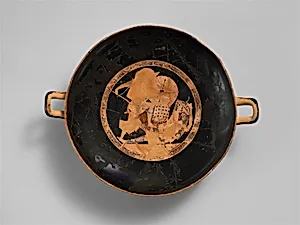
This vases by artist Painter of the Paris Gigantomachy exemplifies the artistic achievements of ca. 490–480 BCE. Fashioned from terracotta, this work represents ancient traditions of ceramic production. Ceramic arts involved sophisticated understanding of clay preparation, forming techniques, firing temperatures, and surface treatments that varied across cultures and periods. These durable objects provide crucial archaeological and art historical evidence, surviving millennia to document artisti...
Art Historical Context
This terracotta kylix, or shallow drinking cup, was crafted in Athens around 490–480 BCE during the Late Archaic period. Attributed to the Painter of the Paris Gigantomachy, the vessel exemplifies the refined red-figure technique that allowed artists to render dynamic human figures with greater naturalism and detail than earlier black-figure methods. Its modest size—about eight inches high—made it both a practical object for symposia and a canvas for storytelling. The kylix’s battle-themed decoration reflects the cultural fascination with heroic myths, particularly the Gigantomachy, the epic struggle between gods and giants. Such imagery on everyday wares connected daily life with divine narratives, reinforcing civic and religious values in ancient Athens. As durable survivors of antiquity, Attic vases like this one offer invaluable glimpses into artistic training, technological skill, and the social rituals of the time. Now in the Metropolitan Museum’s Greek and Roman collection, the cup illustrates how classical pottery bridged utility and art, preserving the aesthetic ideals of idealized forms and narrative clarity that would shape Western visual culture for centuries.