
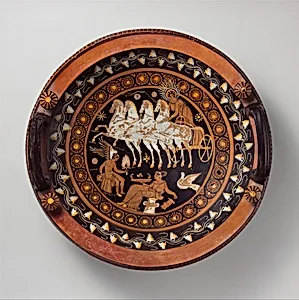
Terracotta lekanis (dish)
late 4th century BCE
Medium
Terracotta
Dimensions
H. 6 1/2 in. (16.5 cm); diameter 22 13/16 in. (58 cm)
Classification
Vases
Culture & Period
Greek, South Italian, Apulian · Late Classical
Department
Greek and Roman Art
Museum
Metropolitan Museum of Art, New York, NY
Credit
Rogers Fund, 1969
Accession Number
69.11.8
Rights
Public Domain
Tags
Art Historical Context
This elegant terracotta lekanis, or shallow dish, was crafted in the late fourth century BCE by the Stuttgart Group of vase painters in Apulia, the Greek colonial region of South Italy. Standing just over six inches high with a broad diameter of nearly twenty-three inches, the vessel exemplifies the refined pottery traditions of the Late Classical period. Apulian artists adapted Athenian red-figure techniques to local tastes, producing works that blended Greek mythology with regional flair for domestic and funerary use. The dish’s painted decoration features graceful women, winged Eros figures, birds, horses, and chariots—motifs often linked to themes of love, marriage, and the afterlife. Such imagery reflects the cultural importance of these vessels, which served both practical purposes, like holding cosmetics or food, and symbolic ones in rituals honoring the deceased. The Stuttgart Group’s distinctive style, marked by fluid figures and lively compositions, highlights the vitality of South Italian workshops during this era. Acquired by the Metropolitan Museum through the Rogers Fund in 1969, this lekanis offers visitors a window into the artistic exchanges between mainland Greece and its colonies, showcasing how everyday objects carried profound cultural and narrative weight.