
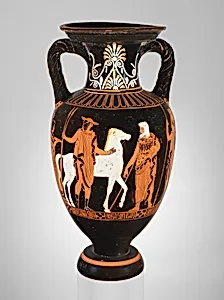
Terracotta neck-amphora (jar) with twisted handles
ca. 400 BCE
Medium
Terracotta
Dimensions
H. 13 3/4 in. (34.9 cm) diameter 6 3/4 in. (17.2 cm)
Classification
Vases
Culture & Period
Greek, Attic · Classical
Department
Greek and Roman Art
Museum
Metropolitan Museum of Art, New York, NY
Credit
Rogers Fund, 1917
Accession Number
17.46.1
Rights
Public Domain
Tags
Art Historical Context
Behold the elegant *Terracotta neck-amora with twisted handles* by the Suessula Painter a masterful Attic Greek vase from around 400 BCE. Standing just 13¾ inches tall, this Classical period jar—likely used for storing olive oil or wine—was crafted from terracotta on a potter's wheel. Its distinctive twisted handles and slender neck exemplify the refined proportions of Athenian pottery, blending utility with artistry for everyday life, symposia, orary rites. The Suessula Painter, named after a vase found near Suessula in Italy, worked in the red-figure technique, a hallmark of late Classical Greek ceramics. Here, figures of men and horses emerge vividly against a black-glazed background: the reserved clay reveals detailed anatomy and dynamic poses, showcasing the painter's skill in capturing motion and musculature. This innovation surpassed earlier black-figure styles, allowing for intricate storytelling—perhaps equestrian scenes evoking heroic myths or athletic contests central to Greek culture. Housed in the Metropolitan Museum of Art's Greek and Roman Art department (acquired via the Rogers Fund in 1917), this amphora offers a window into Athens' golden age of democracy and artistic excellence. Its compact form belies its cultural weight, preserving the vitality of ancient narratives for modern eyes.
About the Artist
Suessula Painter
**The Suessula Painter** was an anonymous Athenian red-figure vase-painter active in the late fifth century BCE, roughly 420–400 BCE. His conventional name derives from Suessula in Campania, southern Italy, where multiple examples of his work were discovered. He is recognized as a distinct artistic personality through consistent stylistic traits identified by scholars such as John Beazley, who att...