Ctrl K
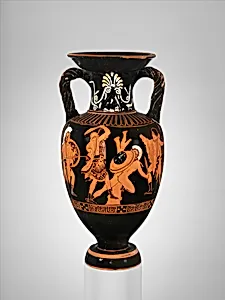
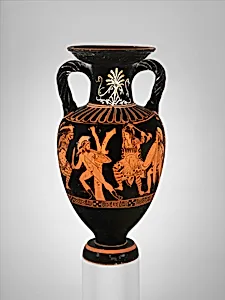
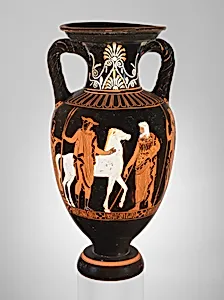
**The Suessula Painter** was an anonymous Athenian red-figure vase-painter active in the late fifth century BCE, roughly 420–400 BCE. His conventional name derives from Suessula in Campania, southern Italy, where multiple examples of his work were discovered. He is recognized as a distinct artistic personality through consistent stylistic traits identified by scholars such as John Beazley, who attributed around fourteen vases to his hand.
He worked in both Athens and Corinth and may have had Corinthian origins. His style features grand, multi-register compositions, remarkable freedom in figure postures, and occasional use of shading—qualities that suggest the influence of contemporary large-scale painting or sculpture. These characteristics place him firmly within the Attic red-figure tradition of the Classical period, during the height of Athenian cultural and imperial power following the Greco-Persian Wars.
One of his most celebrated works is the red-figure amphora in the Louvre depicting the Gigantomachy (the battle between the Olympian gods and the Giants), created circa 410–400 BCE. Standing nearly 70 cm tall, the vase shows elaborate scenes across its body, with Zeus, Athena, Herakles, and other deities engaged in dynamic combat. Specialists have noted possible inspiration from the Gigantomachy on the shield of Phidias’ Athena Parthenos. Other attributed pieces include neck-amphorae in the Metropolitan Museum of Art (ca. 400 BCE) featuring departure and libation scenes, as well as column-kraters now in collections such as the British Museum.
The Suessula Painter’s vases, exported widely to Italy, contributed to the development of South Italian ceramic traditions in the fourth century BCE. His innovative use of added white and expressive figural groupings helped bridge late Classical Attic painting with emerging regional styles, ensuring his anonymous legacy endures through the surviving masterpieces attributed to his distinctive hand.