
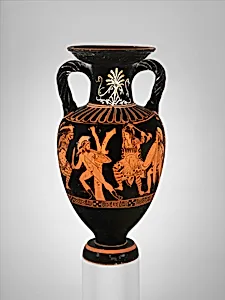
Terracotta neck-amphora (jar) with twisted handles
ca. 400 BCE
Medium
Terracotta
Dimensions
H. 14 1/16 in. (35.8 cm)
Classification
Vases
Culture & Period
Greek, Attic · Classical
Department
Greek and Roman Art
Museum
Metropolitan Museum of Art, New York, NY
Credit
Fletcher Fund, 1944
Accession Number
44.11.12
Rights
Public Domain
Tags
Art Historical Context
This elegant terracotta neck-amphora, created around 400 BCE by the Suessula Painter, exemplifies the refined artistry of Athenian vase painting during Greece’s Classical period. Standing just over fourteen inches tall, the vessel features distinctive twisted handles and would have been used to store wine or oil. As an Attic work, it reflects the cultural prominence of Athens, where such vases often served both practical and ceremonial purposes, frequently given as prizes or offerings. The Suessula Painter’s red-figure technique allows for lively, detailed scenes across the vase’s surface. The decoration prominently features Amazons—mythical warrior women—alongside male nudes and shields, evoking the popular theme of the Amazonomachy. These narratives symbolized the triumph of Greek civilization over chaos and foreign forces, resonating deeply in the years following the Persian Wars. Today housed in the Metropolitan Museum of Art’s Greek and Roman collection, this amphora offers visitors a vivid glimpse into ancient storytelling and the sophisticated pottery traditions that flourished in Athens at the close of the fifth century BCE.
About the Artist
Suessula Painter
**The Suessula Painter** was an anonymous Athenian red-figure vase-painter active in the late fifth century BCE, roughly 420–400 BCE. His conventional name derives from Suessula in Campania, southern Italy, where multiple examples of his work were discovered. He is recognized as a distinct artistic personality through consistent stylistic traits identified by scholars such as John Beazley, who att...