
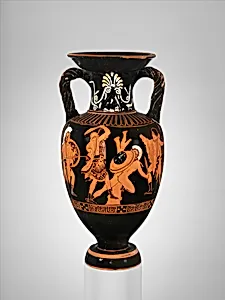
Terracotta neck-amphora (jar) with twisted handles
ca. 400 BCE
Medium
Terracotta
Dimensions
H. 14 in. (35.5 cm)
Classification
Vases
Culture & Period
Greek, Attic · Classical
Department
Greek and Roman Art
Museum
Metropolitan Museum of Art, New York, NY
Credit
Fletcher Fund, 1944
Accession Number
44.11.13
Rights
Public Domain
Tags
Art Historical Context
This elegant terracotta neck-amphora, standing just 14 inches tall, was crafted in Athens around 400 BCE during the height of the Classical period. Attributed to the Suessula Painter, it exemplifies the refined Attic vase tradition, where potters and painters collaborated to produce functional yet artistically sophisticated vessels. Its twisted handles and balanced proportions highlight the technical skill involved in shaping and firing terracotta, a medium prized for its durability and capacity to hold detailed surface decoration. The vase’s imagery features Amazons, maenads, and satyrs—mythological figures that animated Greek storytelling and ritual life. Such scenes often appeared on vessels used in symposia or funerary contexts, bridging daily experience with the divine and heroic realms. As a work from the Metropolitan Museum’s Greek and Roman Art collection, this amphora offers visitors a tangible connection to ancient Athenian culture, where art, mythology, and utility seamlessly intertwined.
About the Artist
Suessula Painter
**The Suessula Painter** was an anonymous Athenian red-figure vase-painter active in the late fifth century BCE, roughly 420–400 BCE. His conventional name derives from Suessula in Campania, southern Italy, where multiple examples of his work were discovered. He is recognized as a distinct artistic personality through consistent stylistic traits identified by scholars such as John Beazley, who att...