
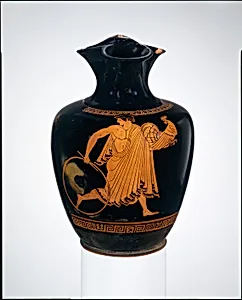
Terracotta oinochoe: chous (jug)
ca. 470 BCE
Medium
Terracotta
Dimensions
H. 6 1/2 in. (16.5 cm) diameter 4 5/16 in. (11 cm)
Classification
Vases
Culture & Period
Greek, Attic · Classical
Department
Greek and Roman Art
Museum
Metropolitan Museum of Art, New York, NY
Credit
Rogers Fund, 1923
Accession Number
23.160.55
Rights
Public Domain
Tags
Art Historical Context
This elegant terracotta oinochoe, or chous, was crafted around 470 BCE by the Pan Painter, a leading figure in Athens’s Classical red-figure tradition. Standing just 6½ inches tall, the vessel was designed for pouring wine and likely formed part of the equipment used during the Anthesteria, Athens’s spring festival honoring Dionysos. Its compact size and graceful handle make it both practical and a fine example of the period’s refined pottery shapes. The Pan Painter is celebrated for his lively figures and economical yet expressive line work. On this jug he depicts the youthful Ganymede, the Trojan prince abducted by Zeus, accompanied by male figures and roosters—traditional love-gifts in Greek iconography. The scene captures the moment when divine favor intersects with human beauty, a favorite theme among Athenian vase-painters of the early Classical era. Such small, narrative vases were prized possessions, often given as gifts or dedicated in sanctuaries. Today, this piece in the Metropolitan Museum’s collection offers visitors an intimate glimpse into the storytelling power of Athenian ceramics and the cultural values they celebrated.