
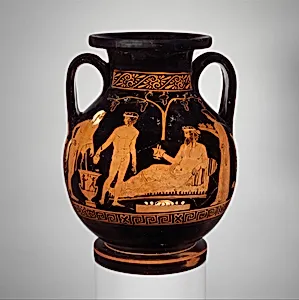
Terracotta pelike (jar)
ca. 420–410 BCE
Medium
Terracotta
Dimensions
H.: 14 1/2 x 11 1/16 in. (36.8 x 28.1 cm)
Classification
Vases
Culture & Period
Greek, Attic · Classical
Department
Greek and Roman Art
Museum
Metropolitan Museum of Art, New York, NY
Credit
Gift of Samuel G. Ward, 1875
Accession Number
75.2.7
Rights
Public Domain
Tags
Art Historical Context
This elegant terracotta pelike, attributed to the Somzée Painter and created in Athens around 420–410 BCE, exemplifies the refined artistry of Classical Greek vase painting. Standing about 14½ inches tall, the vessel was designed to hold wine or other liquids, its broad body and sturdy handles making it both practical and visually balanced. As an Attic work from the late fifth century, it reflects the period’s shift toward more naturalistic figures and expressive compositions during the height of Athenian cultural achievement. The painted decoration, featuring men, women, satyrs, and motifs of wine, likely portrays a Dionysian revel or symposium scene—a popular subject that celebrated the god of wine and the pleasures of communal drinking. Such imagery not only adorned everyday objects but also connected users to mythological narratives and social rituals central to Greek life. The Somzée Painter’s style, characteristic of red-figure technique, allowed for greater detail in anatomy and drapery, bringing a lively sense of movement to the figures. Acquired by the Metropolitan Museum in 1875 as a gift, this pelike offers modern viewers a tangible link to ancient Athenian workshops, where skilled painters transformed humble clay into enduring art that blended utility with storytelling.
About the Artist
Somzée Painter
**The Somzée Painter** was an anonymous Attic vase painter active in Athens during the late fifth century BCE, specifically around 420–410 BCE. Like many ancient Greek artisans of his era, his personal biography remains unknown; no records survive of his early life, training, or family. He is identified today solely through stylistic analysis of surviving pottery, a method pioneered by scholars su...