
Terracotta pyxis (box)
ca. 550 BCE
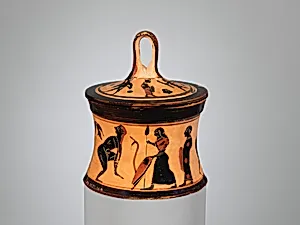
Medium
Terracotta
Dimensions
H. with lid 3 11/16 in. (9.4 cm)
Classification
Vases
Culture & Period
Greek, Attic · Archaic
Department
Greek and Roman Art
Museum
Metropolitan Museum of Art, New York, NY
Credit
Rogers Fund, 1906
Accession Number
06.1021.164a, b
Rights
Public Domain
Art Historical Context
This delicate terracotta pyxis, around 550 BCE by the Painter of Munich 1842, exemplifies Attic Greek artistry from the Archaic period. just 3 11/16 inches tall its lid, this small box—classified among vases in the Metropolitan Museum of Art's Greek and Roman Art collection—was likely used by women to cosmetics, jewelry, or trets. Acquired through the Rogers Fund in 6, it showcases the refined black-figure technique typical of the era, where silhouettes were painted in glossy black slip on a fired clay body, with intricate details incised through to reveal the red clay beneath. In Archaic Athens, such pyxides were everyday luxuries, bridging domestic life and artistic innovation. The Painter of Munich 1842, an anonymous master named after a vase in Munich's collection, contributed to the black-figure style's peak, just before the shift to red-figure pottery. This pyxis reflects the period's fascination with narrative decoration—often mythological scenes or daily rituals—capturing a vibrant cultural moment when Athens emerged as a artistic powerhouse. Though modest in size, its survival offers a window into ancient Greek femininity and craftsmanship, reminding us how pottery preserved stories for millennia. A true gem for any visitor! (198 words)