
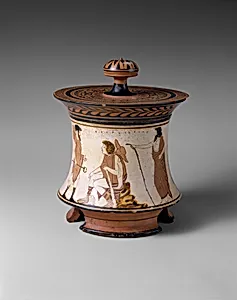
Terracotta pyxis (box)
ca. 465–460 BCE
Medium
Terracotta
Dimensions
H. 4 3/4 in. (12.1 cm) H. with cover 6 3/4 in. (17.2 cm)
Classification
Vases
Culture & Period
Greek, Attic · Classical
Department
Greek and Roman Art
Museum
Metropolitan Museum of Art, New York, NY
Credit
Rogers Fund, 1907
Accession Number
07.286.36a, b
Rights
Public Domain
Tags
Art Historical Context
This exquisite terracotta pyxis, by the Penthesilea Painter around 465–460 BCE, exemplifies the refined artistry of Classical Attic Greece. A small cylindrical box standing just 6¾ inches tall with its lid it served as a luxurious container for cosmetics, jewelry, or trinkets, reflecting the daily elegance of wealthy Athenian women. The Penthesilea Painter, anonymous master named after a famous vase depicting the Amazon queen's mythical defeat by Achilles, was a leading figure in late red-figure vase painting—a technique where figures were outlined in black slip on a red clay ground, allowing intricate details to shine through firing. Adorning this pyxis are lively scenes of men and women, likely drawn from mythology or daily life, capturing the period's ideal of harmonious beauty and narrative storytelling. Produced during Athens' Golden Age, amid the Parthenon's construction and Pericles' patronage of the arts, such vases highlight the fusion of utility and high culture. Their durability—fired terracotta surviving millennia—preserved intimate glimpses into ancient rituals and gender dynamics. Today, housed in the Metropolitan Museum of Art's Greek and Roman Art department (acquired via Rogers Fund, 1907), this pyxis invites us to marvel at the Penthesilea Painter's fluid lines and poised figures, bridging the ancient world to our own curiosity.