
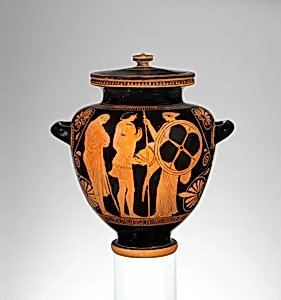
Terracotta stamnos (jar)
ca. 470–460 BCE
Medium
Terracotta
Dimensions
H. 16 in. (40.7 cm); width with handles 14 5/8 in. (37.2 cm); H. without cover 14 3/16 in. (36.1 cm)
Classification
Vases
Culture & Period
Greek, Attic · Classical
Department
Greek and Roman Art
Museum
Metropolitan Museum of Art, New York, NY
Credit
Rogers Fund, 1941
Accession Number
41.162.20a, b
Rights
Public Domain
Tags
Art Historical Context
This terracotta stamnos, created in Athens around 470–460 BCE during the Classical period, exemplifies the refined artistry of Attic Greek vase painting. Produced by the Deepdene Painter, the vessel’s balanced form—standing about 16 inches tall with sturdy handles—served practical purposes such as storing wine or oil while doubling as a canvas for mythological narratives. Its presence in the Metropolitan Museum’s Greek and Roman Art collection underscores the enduring appeal of these objects, which blended utility with storytelling in daily Athenian life. The vase’s decoration draws from the Trojan War, portraying warriors, men, women, armor, and shields in dynamic scenes that reflect the cultural reverence for Homeric epics. Such imagery not only entertained viewers but also reinforced shared values of heroism and conflict resolution in fifth-century BCE society. The Deepdene Painter’s distinctive style, characterized by careful attention to drapery and expressive figures, helped elevate red-figure pottery as a sophisticated medium during this golden age of Greek art.