
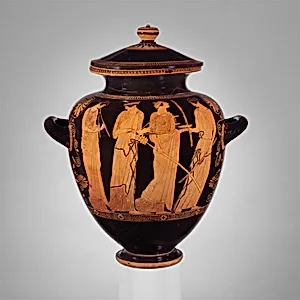
Terracotta stamnos (jar)
ca. 450 BCE
Medium
Terracotta
Dimensions
H. 14 7/8 in. (37.8 cm) diameter 11 7/8 in. (30.2 cm)
Classification
Vases
Culture & Period
Greek, Attic · Classical
Department
Greek and Roman Art
Museum
Metropolitan Museum of Art, New York, NY
Credit
Rogers Fund, 1906
Accession Number
06.1021.178
Rights
Public Domain
Tags
About this artwork
This vases titled "Terracotta stamnos (jar)" by Menelaos Painter dates to ca. 450 BCE. Executed in terracotta, this work represents Greek, Attic, Classical artistic traditions. The piece demonstrates the technical skill and artistic vision characteristic of its period. The work's presence in a major museum collection attests to its significance in the broader narrative of art history. As part of institutional holdings, it serves both scholarly research and public education, offering insights int...
Art Historical Context
Step into the vibrant world of Classical Athens with this terracotta stamnos, a two-handled jar crafted by the Menela Painter around 450 BCE. Standing just under 15 inches tall, this Attic Greek vessel exemplifies the red-figure pottery technique, where figures were painted in the natural red clay and backgrounds fired black, allowing intricate details to shine through. Adorning its surface are lively scenes of women—likely maenads, the ecstatic followers of Dionysusplaying flutes and other musical instruments, capturing the joyous revelry of ancient Greek festivals. In the height of the Classical period, such vases were not mere storage jars for wine but canvases for storytelling, blending everyday utility with mythological narrative. The Menelaos Painter's precise line work and dynamic poses reflect Athens' golden age of artistic innovation, influenced by the democratic flourishing and theater culture. Maenads symbolized wild abandon and divine inspiration, offering a window into the social rituals and gender dynamics of the time. Today, housed in the Metropolitan Museum of Art's Greek and Roman Art collection (acquired via the Rogers Fund in 1906), this stamnos invites us to ponder how music and myth intertwined in ancient life, bridging scholarly study with the timeless thrill of human expression.