
Textile
Unknown Artist
15th century
Medium
Silk, linen and gold thread
Dimensions
Overall: 14 1/2 × 3 7/8 in. (36.8 × 9.8 cm) Storage (Mat): 17 × 13 in. (43.2 × 33 cm)
Classification
Textiles-Woven
Culture
German
Department
Medieval Art
Museum
Metropolitan Museum of Art, New York, NY
Credit
Rogers Fund, 1909
Accession Number
09.50.976
Rights
Public Domain
Art Historical Context
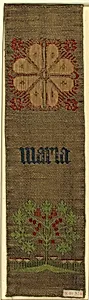
This exquisite 15th-century German, woven from silk, linen, and shimmering gold thread, offers a glimpse into the opulent craftsmanship of late medieval Europe. Measuring just 14½ × 3⅞ inches, its narrow, elongated form suggests it may have served as a decorative band, border for vestments, or part of a larger liturgical hanging. Acquired through the Rogers Fund in 1909 and now housed in the Metropolitan Museum Art's Medieval Art Department it exemplifies the technical mastery of German weavers during a time when textile production was a revered art form. The use of luxurious silk—likely imported via trade routes from the East—and gold thread, often wrapped around a core filament for durability and luster, highlights the piece's elite status. These materials were reserved for ecclesiastical garments, altar cloths, or noble attire, symbolizing divine splendor and wealth. Woven techniques allowed intricate patterns to emerge directly in the loom, blending functionality with artistry in a period before widespread printing or mechanization. Though the artist remains unknown, this fragile survivor speaks volumes about cultural exchange and devotion in 15th-century Germany, inviting us to appreciate the tactile beauty of medieval textiles that once adorned sacred spaces.