
Textile
Unknown Artist
14th century
Medium
Silk, linen, gold thread
Dimensions
Overall: 4 × 9 in. (10.2 × 22.9 cm) Storage (Mat): 8 1/2 × 13 in. (21.6 × 33 cm)
Classification
Textiles-Woven
Culture
Italian
Department
Medieval Art
Museum
Metropolitan Museum of Art, New York, NY
Credit
Rogers Fund, 1909
Accession Number
09.50.997
Rights
Public Domain
Art Historical Context
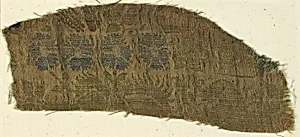
This exquisite 14th-century Italian fragment, woven from silk, linen, and shimmering gold thread, offers a glimpse into the opulent world of medieval craftsmanship. Measuring just 4 × 9 inches, its small scale suggests it may have been part of a larger garment, ecclesiastical vestment, or decorative panel. Acquired through the Rogers Fund in 1909 now housed in the Metropolitan of Art's Medieval Art, it exemplifies the technical mastery of Italian weavers during a time when luxury fabrics were symbols of wealth and piety. late medieval Italy—amid the bustling trade centers of Lucca, Florence, and Venice—textiles like this were prized imports and exports, blending local ingenuity with influences from Byzantine and Islamic traditions. The use of gold thread, likely applied through sophisticated brocading or lampas techniques, created a luminous effect that caught the light in grand cathedrals or noble courts. Such materials were labor-intensive and costly, reserved for the elite, highlighting the era's growing emphasis on visual splendor as Italy transitioned toward the Renaissance. Though the artist remains unknown, this woven treasure underscores Italy's pivotal role in Europe's textile renaissance, where silk roads converged with artistic innovation. Visitors can appreciate how these fragile survivors preserve the tactile elegance of a bygone age.