
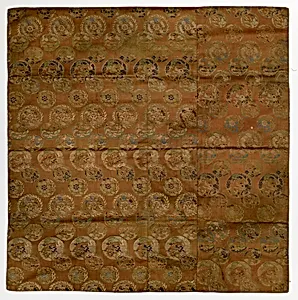
Textile cover
1615-1868
Classification
Costume and Textile
Department
Smithsonian Collection
Museum
Smithsonian American Art Museum
Credit
Gift of Charles Lang Freer
Accession Number
F1916.644
Rights
Public Domain
Tags
About this artwork
To 1916
Art Historical Context
This exquisite *Textile cover*, dating to Japan's Edo period (16151868), exemplifies the era's masterful textile arts. Crafted during a time of relative peace and economic prosperity under the Tokugawa shogunate, such pieces were often used for clothing, furnishings, or ceremonial covers, reflecting the vibrant urban culture of cities like Edo (modern Tokyo). The unknown artist's work entered the Smithsonian collection through the generosity of Charles Lang Freer a pioneering American collector of Asian art, whose gifts enriched institutions like the Freer Gallery. The textile showcases sophisticated Japanese weaving techniques, including brocading and weft patterning on silk fibers. Brocading involves supplementary weft threads floated across the surface to create raised, lustrous motifs, while weft patterning builds intricate designs through colored filling yarns. These methods highlight silk's prestige in Edo Japan, where it symbolized luxury and craftsmanship, often featuring nature-inspired patterns or geometric elegance that influenced fashion and interior design. Though details like the exact medium remain elusive, this cover invites visitors to appreciate the tactile beauty and cultural depth of Edo textiles—artworks that wove daily life into enduring splendor. (198 words)
About the Artist
Unknown
The artist designated as "Unknown" in our virtual museum's collection exemplifies a poignant chapter in art history: creators whose identities have faded into obscurity despite the enduring power of their work. With only one known artwork attributed to them in our holdings, this figure represents countless anonymous hands that shaped visual culture across centuries. Museums worldwide, including th...