
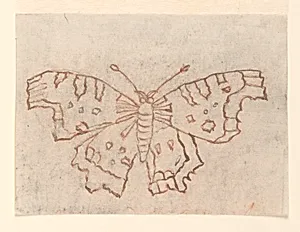
Textile Design: A Butterfly
1800–30
Classification
textile designs
Department
Smithsonian Collection
Museum
Smithsonian American Art Museum
Credit
Gift of Mrs. Grafton H. Pyne
Accession Number
1948-118-17
Rights
Public Domain
About this artwork
Research in Progress
Art Historical Context
### Textile Design: A Butterfly This delicate textile design, featuring a butterfly motif, dates to the early 19th century1800–1830) and hails from the Smithsonian American Art Museum's collection. Created during America's Federal period, when neoclassical tastes blended with growing fascination for the natural world, it exemplifies the ornamental patterns that adorned fabrics, furnishings, and fashion. Butterflies, as enduring symbols of transformation and fleeting beauty, were popular in decorative arts, evoking the era's romantic appreciation for nature amid rapid industrialization. Though the artist and precise medium remain unknown—reflecting ongoing research—this piece highlights the artistry of textile design in early American culture. Textile patterns like this one fueled a burgeoning domestic industry, influencing everything from gowns to curtains and showcasing skilled craftsmanship in block printing or weaving techniques common at the time. Its classification as a textile design underscores its role in everyday elegance, bridging fine art and functional beauty. Generously gifted by Mrs. Grafton H. Pyne, this work invites visitors to ponder the anonymous creators who shaped American aesthetics. As research progresses, it promises deeper insights into 19th-century design innovation and cultural tastes. (198 words)
About the Artist
Unknown
The artist designated as "Unknown" in our virtual museum's collection exemplifies a poignant chapter in art history: creators whose identities have faded into obscurity despite the enduring power of their work. With only one known artwork attributed to them in our holdings, this figure represents countless anonymous hands that shaped visual culture across centuries. Museums worldwide, including th...