
Textile Fragment
Unknown Artist
5th–6th century
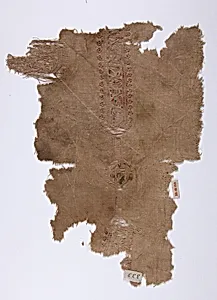
Medium
Wool, linen; plain weave, tapestry weave
Dimensions
Max. H. 13 7/16 in. (34.2 cm) Max. W. 9 13/16 in. (25 cm)
Classification
Textiles
Department
Islamic Art
Museum
Metropolitan Museum of Art, New York, NY
Credit
Purchase by subscription, 1889
Accession Number
89.18.129
Rights
Public Domain
Art Historical Context
This exquisite Textile Fragment, dating to the 5th–6th century, offers a glimpse into the sophisticated textile traditions of the early Islamic world. Housed in the Metropolitan Museum of Art's Islamic Art Department, this small yet remarkable piece—measuring just over 13 inches high and inches wide—was acquired through a subscription purchase in 1889 Crafted from wool and linen, it the durability and versatility of natural fibers used in everyday and ceremonial garments during late antiquity. The fragment showcases a masterful blend of techniques: plain weave for its sturdy ground fabric, ideal for clothing or furnishings, and tapestry weave for vibrant decorative patterns. Tapestry weaving, where colored weft threads create motifs without floating yarns, allowed artisans to produce intricate designs efficiently, a hallmark of regional workshops in areas like Egypt or the Near East. Though the specific motifs are not detailed here, such fragments often featured geometric or figural elements reflecting cultural exchanges along ancient trade routes. These textiles hold immense cultural significance, serving not only practical purposes but also as status symbols and storytelling mediums. Surviving fragments like this one illuminate the artistry of anonymous makers whose innovations influenced later Islamic textile production, bridging pre-Islamic and early caliphal eras in a rich tapestry of history.