
Textile Fragment
Unknown Artist
3rd–4th century
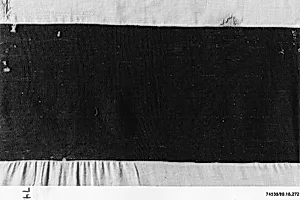
Medium
Wool, linen; plain weave
Dimensions
H. 20 1/2 in. (52 cm) W. 15 7/16 in. (39.2 cm wide)
Classification
Textiles
Department
Islamic Art
Museum
Metropolitan Museum of Art, New York, NY
Credit
Purchase by subscription, 1889
Accession Number
89.18.272
Rights
Public Domain
Art Historical Context
This delicate textile fragment, dating to the 3rd–4th century, offers a glimpse into the everyday artistry of late antiquity. Woven from wool and linen in a plain weave—a fundamental technique that interlaces warp and weft threads in an over-under pattern—it measures 20½ inches high by 15⅞ inches wide. Housed in the Metropolitan Museum of Art's Department of Islamic Art and acquired through subscription purchase in 1889 this piece exemplifies the durable, practical textiles produced in regions that would later flourish under Islamic rule. The plain weave's straightforward construction made it ideal for garments, furnishings, or ceremonial cloths, highlighting the skill of anonymous weavers who combined wool's warmth with linen's breathability. Such fragments are rare survivors, preserved by Egypt's arid sands or similar environments, revealing colorfast dyes and motifs that influenced later Islamic textile traditions. As a testament to pre-Islamic craftsmanship in the Near East or North Africa, this artifact bridges ancient weaving practices with the opulent fabrics of the Islamic golden age, inviting us to appreciate the quiet elegance of utility turned art.