
Textile Fragment
Unknown Artist
4th–5th century
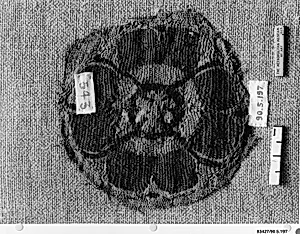
Medium
Wool, linen; tapestry weave
Classification
Textiles
Department
Islamic Art
Museum
Metropolitan Museum of Art, New York, NY
Credit
Gift of George F. Baker, 1890
Accession Number
90.5.197
Rights
Public Domain
Art Historical Context
This exquisite *Textile Fragment* from the 4th–5th century offers a rare glimpse into the masterful textile traditions of the early Islamic world. Crafted an unknown artist using wool and linen in a tapestry weave technique, it exemplifies the period's sophisticated weaving methods. In tapestry weave, colored weft threads are woven individually to form patterns, creating vibrant, durable designs without the need for additional embroidery—a labor-intensive process that highlights the skill of ancient artisans. Housed in the Metropolitan Museum of Art's Department of Islamic Art, this survives from a time of cultural flourishing in regions like Egypt and the Near East, bridging late antiquity and the dawn of Islam. Textiles from this era were essential for clothing, furnishings, and trade, often reflecting motifs inspired by nature, geometry, or daily life. Their preservation is remarkable, as organic materials rarely endure millennia, making pieces like this invaluable for understanding early Islamic craftsmanship and economic networks. A generous gift of George F. Baker in 1890, this artifact invites us to marvel at the ingenuity of forgotten hands, connecting us to a vibrant past.