
Textile Fragment
Unknown Artist
3rd–4th century
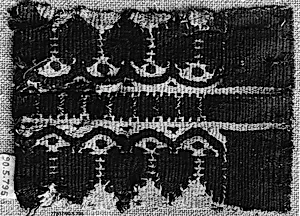
Medium
Wool, linen; plain weave, tapestry weave
Dimensions
Max. H. 4 3/16 in. (10.6 cm) Max. W. 2 15/16 in. (7.5 cm)
Classification
Textiles
Department
Islamic Art
Museum
Metropolitan Museum of Art, New York, NY
Credit
Gift of George F. Baker, 1890
Accession Number
90.5.795
Rights
Public Domain
Art Historical Context
This delicate textile fragment, dating to the 3rd–4th century, offers a glimpse into the sophisticated weaving traditions of the Late Antique world. Housed in the Metropolitan Museum of Art's Department of Islamic Art, it measures just 4 3/16 inches high by 2 15/16 inches wide—small enough to fit in the palm of your hand—yet it speaks volumes about everyday artistry in regions like Egypt or the Near East, where such pieces often adorned clothing, furnishings, or burial shrouds. A generous gift from George F. Baker in 1890, it survives as a testament to ancient craftsmanship preserved through the ages. Crafted from wool and linen using plain weave for the foundation and tapestry weave for decorative elements, the fragment highlights advanced techniques. Tapestry weave, where colored wefts are inserted discontinuously to create patterns without floats, allowed weavers to produce vibrant, pictorial designs efficiently—much like a loom-based painting. This method was widespread in the Mediterranean and foreshadowed the rich textile traditions of the emerging Islamic world, blending functionality with aesthetic appeal. Though the artist remains unknown, this fragment's cultural significance lies in its role as a cultural bridge: it reflects pre-Islamic exchange networks along trade routes, where wool's durability met linen's fineness to produce items of beauty and utility for diverse communities. A tiny survivor, it invites us to marvel at the hands that wove history into thread.