
Textile Fragment
Unknown Artist
14th century
Medium
Wool
Dimensions
H. 4 5/8 in. (11.8 cm) W. 10 1/4 in. (26 cm)
Classification
Textiles-Embroidered
Department
Islamic Art
Museum
Metropolitan Museum of Art, New York, NY
Credit
Rogers Fund, 1972
Accession Number
1972.120.7
Rights
Public Domain
Tags
Art Historical Context
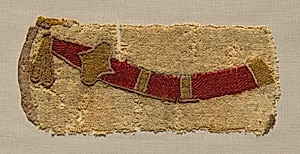
This delicate wool textile fragment, embroidered in the 14th century, a glimpse into the rich world of Islamic art from the medieval Islamic world. Measuring just 4 5/8 by 10 1/4 inches, it likely originated as part of a larger garment, banner, or furnishing, preserved through the Rogers Fund at The Metropolitan Museum of Art. classification as an embroidered textile highlights the mastery of artisans in creating intricate designs on everyday materials like wool, which was prized for its durability and warmth in regions from the Middle East to Central Asia. The standout motif—swords—evokes the martial culture of the era, possibly alluding to themes of protection, valor, or status in Islamic societies under dynasties like the Mamluks or Ilkhanids. Embroidery techniques, often using silk or metallic threads on wool grounds, allowed for vibrant patterns that conveyed prestige and storytelling without figurative representation, adhering to aniconic traditions. Such fragments are rare survivors, revealing how textiles served as portable art forms traded along Silk Road routes. Today, this piece invites us to appreciate the unsung skill of anonymous makers, whose work adorned the lives of warriors, merchants, and elites, bridging utility and beauty in 14th-century Islamic life.