
Textile Fragment
Unknown Artist
14th–15th century
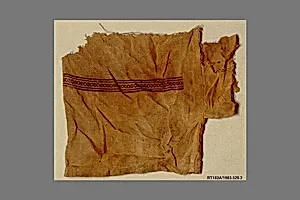
Medium
Linen and silk
Dimensions
H. 16 1/2 in. (41.9 cm) W. 19 1/2 in. (49.5 cm)
Classification
Textiles-Woven
Department
Islamic Art
Museum
Metropolitan Museum of Art, New York, NY
Credit
Gift of Dr. Lilly Engler, 1983
Accession Number
1983.529.3
Rights
Public Domain
Art Historical Context
This exquisite *Textile Fragment* from the 14th–15th century offers a glimpse into the masterful weaving traditions of the Islamic world. Crafted from linen and silk, this woven piece measures 16½ by 19½ inches and survives as a precious remnant of what was likely a larger garment, furnishing, or ceremonial object. Donated to the Metropolitan Museum of Art 1983 by Dr. Lilly Engler, it in the museum's Islamic Art department, highlighting the enduring allure of textiles in medieval Islamic culture. The use of silk alongside linen underscores the technical sophistication of Islamic artisans during this era, a time when textile production flourished across regions like Egypt, Persia, and the Levant. Weavers employed complex loom techniques to interlace these fibers, creating durable yet luxurious fabrics prized for their sheen, strength, and potential for intricate patterns—though faded here, they once likely featured geometric motifs, floral designs, or calligraphy emblematic of Islamic aesthetics. These textiles were not mere utilities but symbols of wealth, trade, and artistic innovation, often exported along Silk Road routes. For visitors, this fragment evokes the tactile splendor of a bygone age, reminding us how everyday materials could embody profound cultural heritage. Pause to imagine it adorning a caliph's court or a merchant's bazaar!