
Textile Fragment
Unknown Artist
13th century
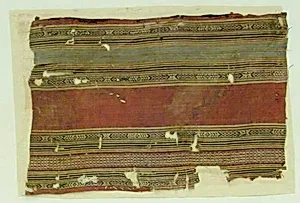
Medium
Silk
Dimensions
Textile: H. 13 3/4 in. (34.9 cm) W. 9 1/4 in. (23.5 cm)
Classification
Textiles
Department
Islamic Art
Museum
Metropolitan Museum of Art, New York, NY
Credit
Gift of Nanette B. Kelekian, in honor of Olga Raggio, 2002
Accession Number
2002.494.821
Rights
Public Domain
Art Historical Context
This exquisite silk textile fragment from the 13th century offers a glimpse into the opulent world of Islamic art. Hailing from the Islamic Art department at The Metropolitan Museum of Art, it measures a modest 13¾ x 9¼ inches (34.9 x 23.5 cm) but exemplifies the mastery of silk weaving during a golden age of craftsmanship. Likely produced in a major center like Persia, Syria, or Egypt, such fragments often survived from larger garments, turbans, or ceremonial hangings, traded along the Silk Road. Silk held immense cultural and economic significance in the medieval Islamic world, symbolizing luxury and prestige. Weavers employed sophisticated techniques like lampas or brocading to create intricate patterns—typically floral motifs, arabesques, or geometric designs evoking paradise gardens from Islamic tradition. These textiles were not just functional but artistic marvels, blending technical innovation with spiritual symbolism, and were coveted by elites across Eurasia. A generous gift to the Met in 2002 by Nanette B. Kelekian in honor of Olga Raggio, this piece invites us to appreciate the anonymous artisans whose skill bridged cultures and centuries, preserving a tactile legacy of medieval splendor.