
Textile
18th century
Classification
printed, dyed & painted textiles
Department
Smithsonian Collection
Museum
Smithsonian American Art Museum
Credit
Gift of Josephine Howell
Accession Number
1973-51-37
Rights
Public Domain
About this artwork
Research in Progress
Art Historical Context
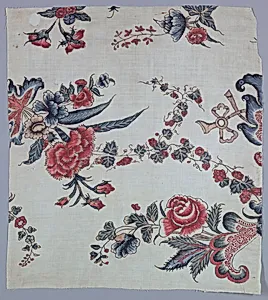
This enigmatic 18th-century textile part of the Smithsonian American Art Museum's, offers a glimpse into the vibrant of colonial-era fabric arts. Donated by Josephine Howell, it exemplifies the craftsmanship of an era when textiles were essential for clothing, home furnishings, and even storytelling through patterns. Though the artist remains unknown and research is ongoing, its presence in the American Art collection highlights how such pieces captured everyday life, trade influences, and emerging American identities amid European and global exchanges. Classified as a printed, dyed, and painted textile, it showcases sophisticated techniques popular in the 1700s. Printing involved carving wooden blocks or using copper plates to transfer bold motifs, while dyeing with natural pigments like indigo or madder created enduring colors. Painting added fine details, blending utility with artistry. These methods, often done by women in households or specialized workshops, democratized decoration and reflected cultural fusion—from Asian-inspired florals to local motifs. As research progresses, this textile invites us to ponder the unsung makers behind America's material culture, reminding visitors of the era's ingenuity and the stories woven into every thread.
About the Artist
Unknown
The artist designated as "Unknown" in our virtual museum's collection exemplifies a poignant chapter in art history: creators whose identities have faded into obscurity despite the enduring power of their work. With only one known artwork attributed to them in our holdings, this figure represents countless anonymous hands that shaped visual culture across centuries. Museums worldwide, including th...