
Textile
1835–1840
Classification
printed, dyed & painted textiles
Department
Smithsonian Collection
Museum
Smithsonian American Art Museum
Credit
Museum purchase from General Acquisitions Endowment
Accession Number
1975-60-1
Rights
Public Domain
About this artwork
Research in Progress
Art Historical Context
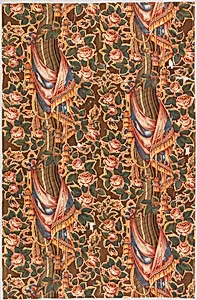
This intriguing *Textile* from 1835–1840, housed in the Smithsonian American Art Museum, exemplifies the vibrant world of printed, dyed, and painted during America's early industrial era. Created by an unknown artist, it reflects the burgeoning textile industry that transformed everyday fabrics into accessible art forms for homes and wardrobes. Acquired through the museum's General Acquisitions Endowment, piece is part of ongoing research, inviting us to ponder its story as scholars uncover more details. Dating to the antebellum period, the textile likely emerged from the rapid advancements in dyeing and printing techniques, such as block printing or early roller methods, which allowed for bold patterns and colors on cotton or wool. These methods blended artisanal skill with mechanized production, making decorated fabrics a hallmark of American domestic life—from quilts and curtains to fashionable dresses. As a snapshot of 19th-century material culture, this work highlights textiles' role in shaping national identity and commerce. Though specifics remain under study, it underscores how such everyday objects carried artistic and cultural weight, bridging craft and fine art in the Smithsonian Collection.
About the Artist
Unknown
The artist designated as "Unknown" in our virtual museum's collection exemplifies a poignant chapter in art history: creators whose identities have faded into obscurity despite the enduring power of their work. With only one known artwork attributed to them in our holdings, this figure represents countless anonymous hands that shaped visual culture across centuries. Museums worldwide, including th...