
Textile
ca. 1812
Classification
printed, dyed & painted textiles
Department
Smithsonian Collection
Museum
Smithsonian American Art Museum
Credit
Museum purchase from General Acquisitions Endowment
Accession Number
1975-60-3-b
Rights
Public Domain
About this artwork
Research in Progress
Art Historical Context
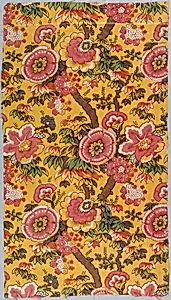
This intriguing textile, dating to around 1812, hails from the Smithsonian American Art Museum's collection. Classified as a printed, dyed and painted textile, it the craftsmanship of early 19th-century America during a pivotal era marked by the War of 1812 and growing national identity. Though the artist remains unknown and research is ongoing, its presence in the Smithsonian Collection underscores its value as a museum purchase from the General Acquisitions Endowment highlighting its potential to reveal stories of daily life, trade, or commemoration. Printed, dyed, and painted textiles were innovative at the time, blending European techniques with emerging American ingenuity. Printing involved block or roller methods to apply patterns, while dyeing used natural or early synthetic pigments for vibrant colors, and painting added unique hand-applied details. These multi-layered processes made textiles both functional—for clothing, furnishings, or flags—and artistic expressions of culture, often reflecting patriotic motifs or floral designs popular in the Federal period. As research progresses, this piece invites visitors to ponder its untold narrative: Was it a household item, a ceremonial cloth, or a product of regional workshops? Its survival offers a tactile window into 1812's world, reminding us how everyday fabrics wove the fabric of history.
About the Artist
Unknown
The artist designated as "Unknown" in our virtual museum's collection exemplifies a poignant chapter in art history: creators whose identities have faded into obscurity despite the enduring power of their work. With only one known artwork attributed to them in our holdings, this figure represents countless anonymous hands that shaped visual culture across centuries. Museums worldwide, including th...