
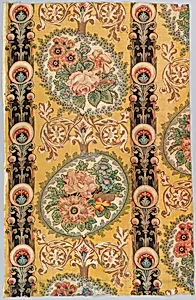
Textile
ca. 1795
Classification
printed, dyed & painted textiles
Department
Smithsonian Collection
Museum
Smithsonian American Art Museum
Credit
Museum purchase from General Acquisitions Endowment
Accession Number
1975-60-4-a
Rights
Public Domain
About this artwork
Research in Progress
Art Historical Context
This intriguing *Textile* from around 1795, part of the Smithsonian American Art's collection, exemplifies the artistry of printed, dyed, and painted fabrics during America's early federal period. Acquired through the museum's General Acquisitions Endowment, it the craftsmanship of an unknown maker amid a time when textiles were essential for clothing, furnishings, and trade goods. As research continues, this piece offers a window into late 18th-century domestic life and emerging American industry. The classification as a printed, dyed, and painted textile reveals sophisticated techniques blending mechanical precision with hand-applied creativity. Printing likely involved wooden blocks or early copper plates to transfer bold patterns, while dyeing—possibly with natural indigo or madder—created rich colors resistant to fading. Hand-painting added personalized flourishes, a labor-intensive process that spoke to the skill of artisans influenced by European imports and global trade routes. Though details remain under study, this textile underscores the cultural significance of fabric in shaping American identity, bridging utility and aesthetics in a young nation. Visitors are invited to ponder its motifs and stories, awaiting further revelations from ongoing scholarship.
About the Artist
Unknown
The artist designated as "Unknown" in our virtual museum's collection exemplifies a poignant chapter in art history: creators whose identities have faded into obscurity despite the enduring power of their work. With only one known artwork attributed to them in our holdings, this figure represents countless anonymous hands that shaped visual culture across centuries. Museums worldwide, including th...