
Textile
early 18th century
Classification
printed, dyed & painted textiles
Department
Smithsonian Collection
Museum
Smithsonian American Art Museum
Credit
Bequest of Elinor Merrell
Accession Number
1995-50-330-a,b
Rights
Public Domain
About this artwork
Research in Progress
Art Historical Context
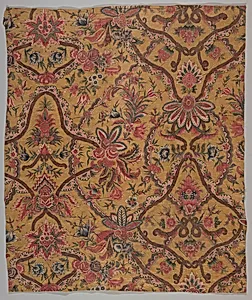
This enigmatic *Textile* from the early 18th century offers a glimpse into the vibrant world of colonial-era fabric arts, housed in the Smithsonian American Art Museum's Smithsonian Collection. Classified as a printed, dyed, and painted, it exemplifies the skilled handiwork of anonymous artisans who transformed plain cloth into colorful, patterned masterpieces. Donated through the bequest of El Merrell, the piece awaits deeper research, inviting us to ponder its story amid ongoing scholarly exploration. In the early 1700s, textiles like this were essential to daily life in America and Europe, used for clothing, furnishings, and trade goods. Techniques such as printing (often with wooden blocks), dyeing (using natural pigments from plants and insects), and painting allowed creators to produce intricate designs efficiently. These methods blended functionality with artistry, reflecting cultural exchanges via global trade routes that brought indigo, madder, and other dyes to colonial workshops. Though its exact medium and origins remain under study, this textile highlights the unsung contributions of early craftspeople to American visual culture. Its presence in the museum underscores the enduring allure of these fragile treasures, bridging history and craftsmanship for today's visitors.
About the Artist
Unknown
The artist designated as "Unknown" in our virtual museum's collection exemplifies a poignant chapter in art history: creators whose identities have faded into obscurity despite the enduring power of their work. With only one known artwork attributed to them in our holdings, this figure represents countless anonymous hands that shaped visual culture across centuries. Museums worldwide, including th...