
The Abandoned Farm
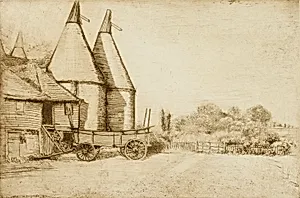
Medium
Graphic Arts-Print
Classification
Graphic Arts-Print
Department
Smithsonian Collection
Museum
Smithsonian American Art Museum
Credit
Smithsonian American Art Museum, Gift of Moune G.H. Webster
Accession Number
1974.85.71
Rights
Public Domain
Tags
Art Historical Context
Donald Shaw MacLaughlan'sThe Abandoned Farm* the quiet melancholy of rural decay through the delicate medium of graphic arts printmaking. Likely an etching, a technique MacLaughlan mastered during the etching revival of the late 19th early 20th centuries, this work showcases his skill in rendering subtle tones and textures. Prints like this were revolutionary for their accessibility, allowing fine art to reach beyond elite collectors into everyday homes. The scene evokes a sense of abandonment with its iconic farm elements—a weathered barn, looming silo, and forgotten wagon—symbols of America's agrarian past giving way to modernity. MacLaughlan, a Canadian-American artist known for pastoral landscapes, infused his prints with a poetic nostalgia, highlighting the beauty in desolation. Though the exact date is unknown, it reflects the transitional era around the turn of the century, when urbanization began reshaping rural life. Housed in the Smithsonian American Art Museum as a gift from Moune G.H. Webster, this piece invites visitors to ponder the enduring allure of the American countryside. Its intricate lines and atmospheric depth make it a standout in the museum's graphic arts collection, reminding us of art's power to preserve fleeting moments.
About the Artist
Donald Shaw MacLaughlan · 1876–1938
Donald Shaw MacLaughlan (1876–1938) was born on November 9 in Charlottetown, Prince Edward Island, Canada, though he is recognized as an American artist after his family relocated to Boston, Massachusetts, in 1890. There, as a teenager, he immersed himself in the Boston Public Library's collections of old master prints, studying works by Albrecht Dürer, Rembrandt van Rijn, and eighteenth-century E...