Ctrl K
1876–1938
Donald Shaw MacLaughlan (1876–1938) was born on November 9 in Charlottetown, Prince Edward Island, Canada, though he is recognized as an American artist after his family relocated to Boston, Massachusetts, in 1890. There, as a teenager, he immersed himself in the Boston Public Library's collections of old master prints, studying works by Albrecht Dürer, Rembrandt van Rijn, and eighteenth-century English, French, and Italian etchers. He experimented with watercolor, oils, and lithography before committing to etching around 1899. In 1898, MacLaughlan traveled to Paris, enrolling at the École des Beaux-Arts, where he studied under Jean-Léon Gérôme and Jean-Paul Laurens. He became acquainted with James McNeill Whistler, whose aesthetic principles profoundly shaped his approach.
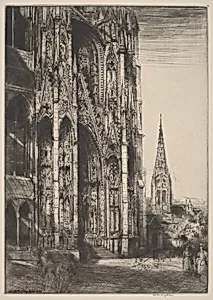
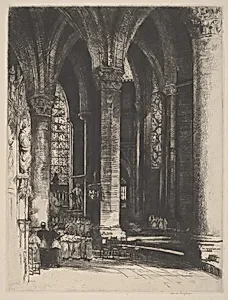
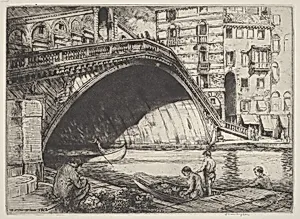
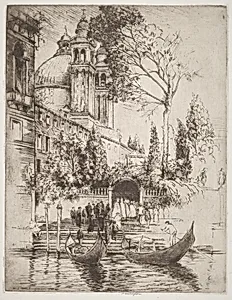
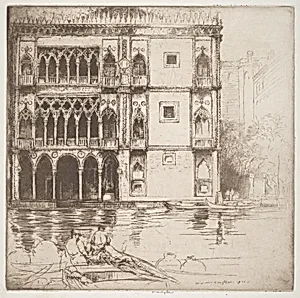
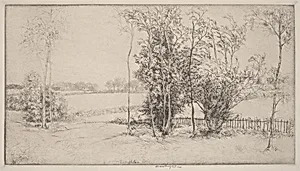
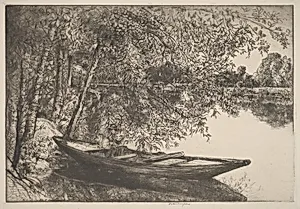
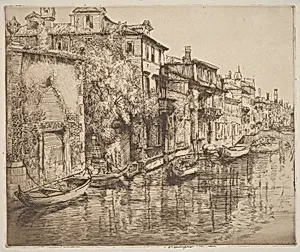
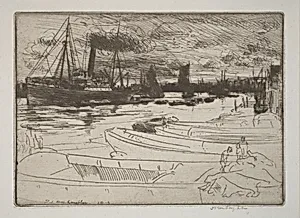
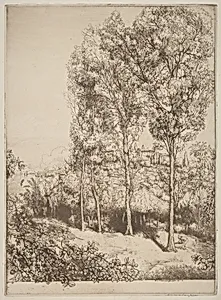
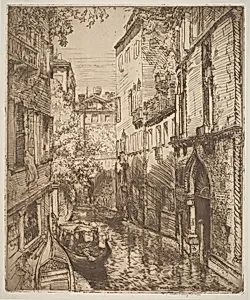
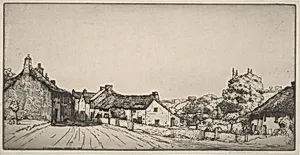
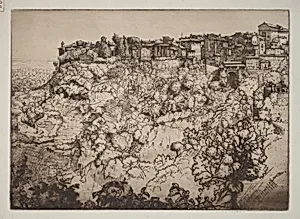
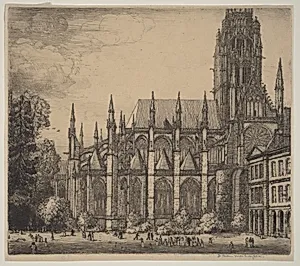
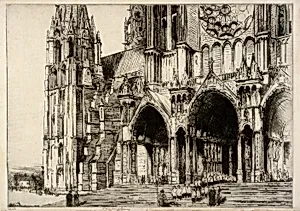
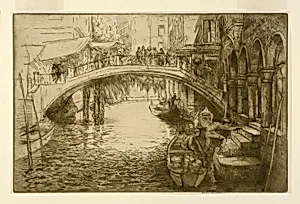
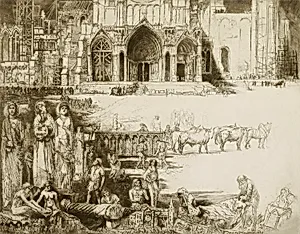
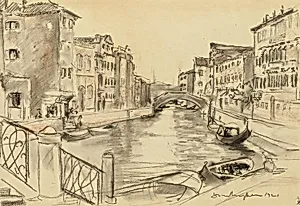
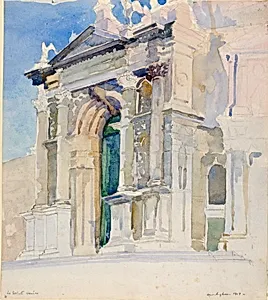
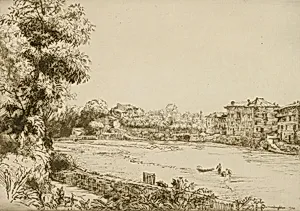
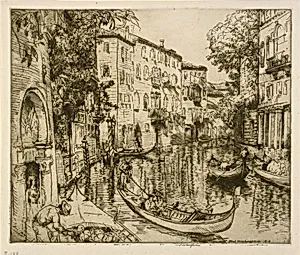
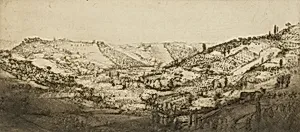
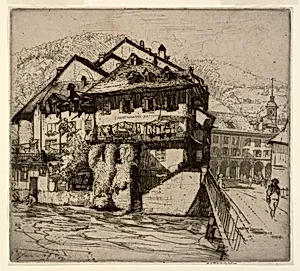
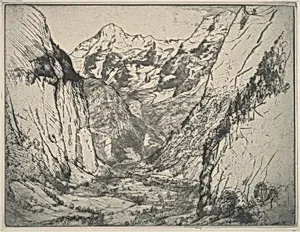
MacLaughlan's style epitomized the Etching Revival, producing meticulous landscapes and townscapes of Europe—France, Italy, England, Switzerland, and Spain—in a tradition echoing Whistler, Rembrandt, Charles Meryon, and Francisco Goya. Renowned for treating etching as a "religious rite," he ground his own inks, adjusting their warmth and stiffness for each plate to achieve atmospheric depth and tonal subtlety. Living in Asolo near Venice from 1905 to 1914, he captured Italian vistas with crisp foregrounds fading into hazy distances, as in *The Lauterbrunnen* (1908, etching and drypoint of Switzerland's Alps). He created around 300 prints, including sets of 25 Paris views (1900) and 12 Chicago views (1931), plus standout works like *Perugia* (1905), *Fishermen of Chioggia* (1908), *Fields of Asolo* (1912), *By the Salute, Venice* (1922), and *The Builders* (1904).
Exhibiting widely from 1901 at the Salon de la Société Nationale des Beaux-Arts, MacLaughlan earned a gold medal at the 1915 Panama-Pacific International Exposition and prizes in Buffalo, Leipzig, and Rome. He showed at Alfred Stieglitz's 291 Gallery (1908), London's Fine Art Society (1926), and with Chicago's Albert Roullier Galleries, while serving on the advisory board of Paris's New Society of American Artists. In 1907, he printed impressions from Rembrandt's plates for dealer Alvin-Beaumont. Married to Aileen Tillman since 1907, he mentored expatriate Canadians like Clarence Gagnon. Elected associate (1935) then full member of the National Academy of Design, MacLaughlan died in Marrakesh, Morocco, in 1938, leaving a legacy of technical mastery that elevated etching's artistry despite modest commercial success in America.