
The Actor Segawa Tomisaburo II as the Otomos' Maid Wakakusa, Actually Prince Korehito
1794–75
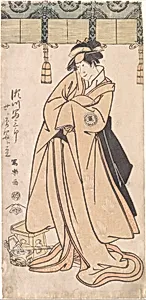
Medium
Middle sheet of a triptych of woodblock prints; ink and color on paper
Dimensions
Image: 12 1/2 x 6 in. (31.8 x 15.2 cm)
Classification
Prints
Culture & Period
Japan · Edo period (1615–1868)
Department
Asian Art
Museum
Metropolitan Museum of Art, New York, NY
Credit
The Francis Lathrop Collection, Purchase, Frederick C. Hewitt Fund, 1911
Accession Number
JP732
Rights
Public Domain
Tags
Art Historical Context
In the vibrant world of Edo-period Japan (1615–1868), ukiyo-e woodblock prints captured the "floating world" of theater, pleasure districts, and everyday life. This striking portrait by Tōshūsai Sharaku, from around 1794–95, kabuki actor Segawa Tomaburō II in the role of Wakakusa, the Otomos' maid—who is secretly Prince Korehito. As the middle sheet of a triptych, it would have formed part of a larger scene when assembled, showcasing the dramatic tension of kabuki storytelling. Sharaku, a enigmatic artist active for just 18 months, revolutionized yakusha-e (actor prints) with his bold, unflinching style, exaggerating facial features to reveal the actors' inner intensity and psychological depth. Printed with ink and color on paper, the work exemplifies the precision of woodblock techniques: intricate carving transferred vibrant hues and sharp lines, making these affordable prints hugely popular among urban audiences. Segawa, a master onnagata (male actor specializing in female roles), embodies the gender fluidity central to kabuki, blurring lines between reality and performance. Housed in the Metropolitan Museum of Art's Asian Art collection, this piece from The Francis Lathrop Collection highlights Sharaku's enduring legacy as a master of expressive portraiture, bridging art and theater in Japan's cultural golden age.
About the Artist
Tōshūsai Sharaku · 1794–1795
Tōshūsai Sharaku stands as one of the most enigmatic figures in Japanese art history, a ukiyo-e printmaker whose brilliant career blazed for just ten months from the summer of 1794 to early spring 1795. Active exclusively in Edo (modern Tokyo), he produced approximately 150 woodblock prints and sketches, primarily yakusha-e—intimate portraits of kabuki actors captured mid-performance. Published by...