
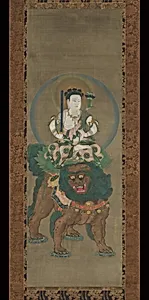
五髪文殊菩薩像|The Bodhisattva Five-Topknot Monju (Manjushri) (Gokei Monju Bosatsu zō)
probably 18th century
Medium
Hanging scroll; ink, color, gofun, gold pigment, and kirikane (cut gold leaf) on silk
Dimensions
Image: 45 5/8 × 16 5/8 in. (115.9 × 42.2 cm) Overall with mounting: 76 3/4 × 22 7/8 in. (194.9 × 58.1 cm) Overall with knobs: 76 3/4 × 24 3/4 in. (194.9 × 62.9 cm)
Classification
Paintings
Culture & Period
Japan · Edo period (1615–1868)
Department
Asian Art
Museum
Metropolitan Museum of Art, New York, NY
Credit
Gift of Sue Cassidy Clark, in honor of Barbara Brennan Ford, 2021
Accession Number
2021.396.2
Rights
Public Domain
Art Historical Context
This exquisite hanging scroll depicts the Bodhisattva Manjri (Monju in Japanese), revered in Mahayana Buddhism as the embodiment of transcendent wisdom. Known here as the "Five-Topknot Monju" (Gokei Monju Bosatsu), figure is rendered with five distinctive chignons atop his head, a rare iconographic form symbolizing profound enlightenment and compassion. Dating to the 18th century during Edo period (1615–1868), this unidentified artist's work reflects the era's flourishing devotion to Buddhist deities, often displayed in temples or private altars for meditation and prayer. Crafted on silk with ink, vibrant colors, gofun (a luminous white pigment made from crushed shells), gold pigments, and intricate kirikane—tiny squares of cut gold leaf—the painting exemplifies Rinpa-influenced opulence. These lavish techniques create a radiant, ethereal glow, elevating the divine figure against a minimalist background and inviting viewers into a contemplative realm. At nearly four feet tall when unrolled, the scroll's grandeur underscores its ritual importance. A gift to the Metropolitan Museum of Art in 2021, this treasure offers a window into Edo Japan's artistic piety, blending technical mastery with spiritual depth. Pause and let its golden wisdom illuminate your visit!