
The Butterfly
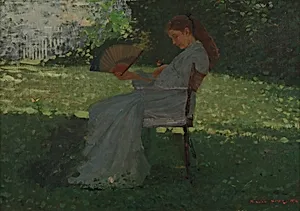
Classification
figures
Department
Smithsonian Collection
Museum
Smithsonian American Art Museum
Credit
Gift of Charles Savage Homer, Jr.
Accession Number
1917-14-1
Rights
Public Domain
About this artwork
Research in Progress
Art Historical Context
Winslow Homer (1836–1910), one of America's foremost Realist painters, created *The Butterfly* in 2, a period when he was transitioning from Civil War illustrations to luminous depictions of everyday life and nature. in Boston, Homer began as a commercial illustrator before embracing fine art, capturing the rugged beauty of the American landscape and its people with unflinching honesty. This work, classified under "figures," likely features human subjects intertwined with the natural world—a recurring theme in his oeuvre, evoking the fleeting grace of butterflies amid human activity. Homer's style emphasized direct observation, bold compositions, and a masterful play of light, often rendered in watercolor or oil to convey atmospheric depth. Painted just after his formative summers in the Adirondacks and Maine, *The Butterfly* reflects the post-war optimism and fascination with the outdoors that defined Gilded Age America. Though the medium remains unidentified amid ongoing research, its presence in the Smithsonian American Art Museum underscores Homer's enduring influence on American realism. A cherished family gift from Charles Savage Homer, Jr., this piece highlights the artist's personal legacy. Visitors will appreciate how *The Butterfly* embodies Homer's ability to blend portraiture with poetry, inviting us to ponder humanity's delicate dance with nature. (198 words)