
The Crucifixion
ca. 1330–35
Medium
Tempera on wood, gold ground
Dimensions
Overall: 18 x 11 3/4 in. (45.7 x 29.8 cm) Painted surface: 15 5/8 x 10 5/8 in. (39.7 x 27 cm)
Classification
Paintings-Panels
Culture
Italian
Department
The Cloisters
Museum
Metropolitan Museum of Art, New York, NY
Credit
The Cloisters Collection, 1961
Accession Number
61.200.1
Rights
Public Domain
Tags
Art Historical Context
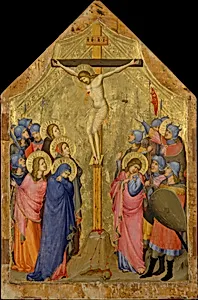
*The Crucifixion*, created around 1330–35 by the anonymous Master of the Codex of Saint George, exemplifies early Italian Gothic panel painting. small tempera-on-wood work, with its shimmering gold ground, measures just 18 x 11¾ inches overall and likely formed part of a larger altarpiece predella or a devotional diptych. Housed in The Cloisters at the Metropolitan Museum of Art, it reflects the devotional fervor of 14th-century Tuscany, where such intimate panels invited personal contemplation of Christ's Passion. The composition centers on the crucified Christ, flanked by the sorrowful Virgin Mary and Roman soldiers, with skulls at the base evoking Golgotha, the "place of the skull." Tempera technique allowed for exquisite detail—vibrant colors layered thinly over a gesso-prepared surface, enhanced by the gold leaf that bathes the scene in ethereal light, symbolizing divinity and the heavenly realm. The Master's style blends Florentine naturalism with Sienese elegance, evident in the expressive figures and patterned drapery. This artwork captures a pivotal moment in Christian iconography, underscoring themes of sacrifice and redemption amid the Black Death's shadow in Italy. Its survival offers a window into anonymous workshop traditions, where piety and artistry intertwined for the faithful.