
The Crucifixion
ca. 1365
Medium
Tempera on wood, gold ground
Dimensions
54 1/8 x 32 1/4 in. (137.5 x 81.9 cm)
Classification
Paintings
Department
Robert Lehman Collection
Museum
Metropolitan Museum of Art, New York, NY
Credit
Robert Lehman Collection, 1975
Accession Number
1975.1.65
Rights
Public Domain
Tags
Art Historical Context
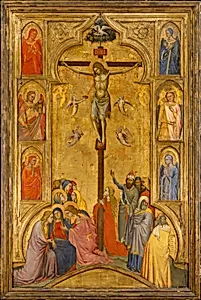
Andrea di Cione, known as Orcagna, crafted *The Crucifixion* around 1365, a poignant tempera-on-wood panel with a shimmering gold ground that evokes the divine light of heaven. Measuring over 4 feet tall, this work from the Robert Lehman Collection at the Metropolitan Museum of Art depicts Christ on the cross, surrounded by mourning angels and the sorrowful Virgin Mary—hallmarks of the emotional intensity captured in its tags of sadness, angels, and Virgin Mary. Orcagna, a leading Florentine artist of the mid-14th century, blended Gothic elegance with emerging Renaissance naturalism, influenced by Giotto's innovative realism. Created in the aftermath of the Black Death, which ravaged Florence in 1348, the painting reflects a era of profound religious devotion and contemplation of mortality. Tempera, a labor-intensive medium of pigments mixed with egg yolk, allowed for luminous, jewel-like colors that glow against the gold leaf background—a technique symbolizing sacred eternity in Italian panel painting. Orcagna's precise figures and expressive gestures heighten the drama of Christ's sacrifice, drawing viewers into a moment of universal grief and redemption. This masterful altarpiece fragment invites us to ponder faith amid suffering, a timeless message from Trecento Italy that still resonates today.