
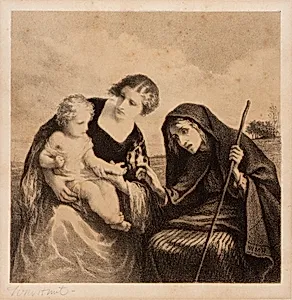
The Fortune Teller
ca. 1857-1858
Medium
Graphic Arts-Print
Classification
Graphic Arts-Print
Department
Smithsonian Collection
Museum
Smithsonian American Art Museum
Credit
Smithsonian American Art Museum, Museum purchase
Accession Number
1968.81
Rights
Public Domain
Tags
Art Historical Context
William Morris Hunt's "The Fortune Teller," created around 1857-1858, offers a glimpse into mid-19th-century American art through its depiction of a figure group gathered in a landscape. As a graphic arts print in the Smithsonian American Art Museum's collection, the work captures the quiet drama of a fortune-telling scene, blending human interaction with natural surroundings. Hunt, known for his sensitive portrayals of everyday moments, used this format to explore themes of mystery and connection that appealed to viewers of the time. Prints like this one played a significant role in 19th-century culture by making art more accessible beyond elite galleries. The medium allowed Hunt's composition to circulate widely, inviting audiences to reflect on the social rituals and storytelling traditions surrounding fortune tellers. The inclusion of landscape elements adds depth, grounding the narrative in a believable outdoor setting that evokes both curiosity and tranquility. Acquired by the museum through purchase, this piece highlights the enduring appeal of graphic arts in preserving intimate human stories. Its focus on a timeless subject reminds visitors how artists of Hunt's era used familiar motifs to comment on life's uncertainties.
About the Artist
William Morris Hunt · 1824–1879
American, Brattleboro, Vermont 1824–1879 Appledore, New Hampshire