
The Genius of Castiglione
Medium
figures
Classification
figures
Department
Smithsonian Collection
Museum
Smithsonian American Art Museum
Credit
Museum purchase through gift of various donors and from Eleanor G. Hewitt Fund
Accession Number
1938-88-8537
Rights
Public Domain
About this artwork
Research in Progress
Art Historical Context
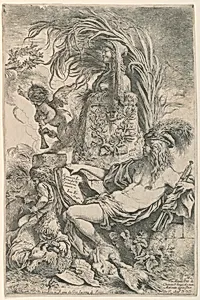
**The Genius of Castiglione (1648) by Giovanni Benedetto Castiglione (1609–1664) invites visitors into the dramatic world of Italian Baroque art. This Italian master from Genoa was a versatile painter, draftsman, and printmaker, renowned for his energetic figures, pastoral scenes, and innovative techniques inspired by masters like Rubens and Rembrandt. Created during the height of the Baroque era—a time of religious fervor and artistic grandeur following the Counter-Reformation—Castiglione's work exemplifies the period's emphasis on movement, emotion, and illusionistic effects. Classified among the museum's figures, this piece likely captures the artist's fascination with allegorical or idealized human forms, rendered in a medium that highlights his experimental spirit. Castiglione was a trailblazer in printmaking, particularly monotypes, blending drawing and printing for unique, painterly results. Though research on this specific work is ongoing, it reflects his genius for infusing classical mythology with personal flair, portraying intellect or inspiration as a dynamic presence. Housed in the Smithsonian American Art Museum through generous donors and the Eleanor G. Hewitt Fund, **The Genius of Castiglione** offers a window into 17th-century Italy's cultural renaissance. Pause here to admire how Castiglione's fluid lines and shadowy depths evoke the era's theatrical spirit—perfect for pondering the timeless spark of creativity.