
清 佚名 舊傳顧愷之 會稽山圖 卷|The Hills of Kuaiji
18th cenury or later
Medium
Handscroll; ink and color on silk
Dimensions
19 3/8 in. × 23 ft. 4 3/8 in. (49.2 × 712.2 cm)
Classification
Paintings
Culture & Period
China · Ming (1368–1644) or Qing dynasty (1644–1911)
Department
Asian Art
Museum
Metropolitan Museum of Art, New York, NY
Credit
John Stewart Kennedy Fund, 1913
Accession Number
13.100.26
Rights
Public Domain
Tags
Art Historical Context
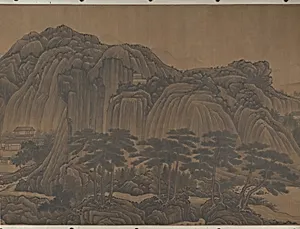
**The Hills of Kua**, a captivating handscroll painted in ink and color on silk measures an impressive 19⅜ × 712 inches, inviting viewers to unroll its panoramic landscape gradually. Traditionally attributed to the Eastern Jin dynasty master Gu Kaizhi (ca. 344–406 CE), celebrated for pioneering Chinese figure painting with his delicate lines and expressive figures, this work is actually from the 18th century or later during the Qing dynasty (1644–1) or possibly late Ming (1368–1644). Created by an unidentified artist, it exemplifies how later painters emulated ancient styles to evoke timeless reverence. Depicting the storied Hills of Kuaiji (modern-day Shaoxing region in Zhejiang), the scroll captures undulating mountains, misty vistas, and subtle human elements amid nature's grandeur—a nod to China's shanshui (mountain-water) tradition. The handscroll format, a hallmark of classical Chinese painting, fosters a meditative viewing experience, unfolding like a story across its vast length. Silk's luminous surface enhances the vibrant colors and fluid ink washes, showcasing refined techniques in layering and texture. Acquired by The Metropolitan Museum of Art in 1913 through the John Stewart Kennedy Fund, this treasure bridges ancient legend and Qing-era artistry, reminding us of Kuaiji's cultural resonance in poetry and history. A perfect gem for contemplating China's enduring landscape legacy! (198 words)