
The Last Days of Harvest
1873
Medium
Graphic Arts-Print
Classification
Graphic Arts-Print
Department
Smithsonian Collection
Museum
Smithsonian American Art Museum
Credit
Smithsonian American Art Museum, Bequest of Frank McClure
Accession Number
1979.98.110
Rights
Public Domain
Tags
Art Historical Context
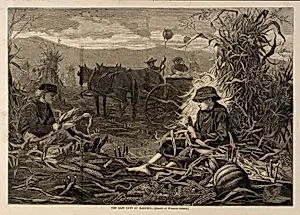
Winslow Homer's *The Last Days of Harvest (1873) is a evocative graphic arts print from the Smithsonian American Museum's collection, bequeathed by Frank McClure. Created in the post-Civil War era, captures the rhythm of rural American life during the waning days of the harvest season. Homer, a master of American Realism, often depicted the hardworking men and women of the countryside, emphasizing their resilience and connection to the land amid the nation's industrial transformation. In this print, a male figure tends to corn stalks on a farm, accompanied by a horse—a poignant nod to the era's reliance on animal power for agriculture. The medium of graphic arts allowed Homer to disseminate his vivid scenes widely through periodicals like *Harper's Weekly*, making fine art accessible to a broad audience. His precise lines and dramatic contrasts highlight the textures of ripened corn and earth, evoking the bittersweet close of summer's bounty. This work exemplifies Homer's commitment to documenting everyday American labor, bridging fine art and illustration. It invites viewers to reflect on the cultural importance of farming heritage, a cornerstone of 19th-century identity, while showcasing his skill in translating painterly realism into the dynamic print format.
About the Artist
Winslow Homer · 1836–1910
Winslow Homer (1836-1910) was one of America's greatest painters and a preeminent figure in 19th-century American art. Largely self-taught, Homer began his career as a commercial illustrator and Civil War correspondent for Harper's Weekly before becoming renowned for his powerful marine subjects and landscape paintings. His mastery of both oil and watercolor, combined with his uncompromising reali...