
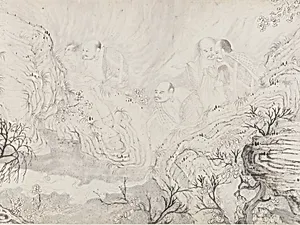
清 石濤 (朱若極) 十六羅漢圖 卷|The Sixteen Luohans
dated 1667
Medium
Handscroll; ink on paper
Dimensions
Image: 18 1/4 in. × 19 ft. 7 3/4 in. (46.4 × 598.8 cm) Overall with mounting: 22 5/16 in. × 74 ft. 7 in. (56.7 × 2273.3 cm)
Classification
Paintings
Culture & Period
China · Qing dynasty (1644–1911)
Department
Asian Art
Museum
Metropolitan Museum of Art, New York, NY
Credit
Gift of Douglas Dillon, 1985
Accession Number
1985.227.1
Rights
Public Domain
Tags
Art Historical Context
Step into the contemplative world of Shitao's *The Sixteen Luohans* (1667), a masterful Qing dynasty handscroll painted in ink on paper. Created by the innovative artist Zhu Ruoji (better known as Shitao Daoji), this monumental work stretches an astonishing 19 feet 7 inches in image length, designed to be unrolled gradually for an immersive, sequential viewing experience. Housed in the Metropolitan Museum of Art's Art department, it exemplifies the handscroll tradition, where viewers encounter scenes like turning the pages of a living story. Shitao one of the "Four Monks" celebrated in Chinese painting history, broke from orthodox styles with his bold, expressive brushwork and emphasis on personal intuition. Here, he depicts the Sixteen Luohans—enlightened disciples of the Buddha—as vivid, eccentric male figures set amid dramatic landscapes. These guardians of Buddhist teachings often appear in Chinese art as protectors against calamity, blending spiritual depth with earthy humanity. The scroll's vast scale and intricate ink techniques highlight Shitao's genius for capturing movement and atmosphere, from misty mountains to dynamic poses. A gift to the Met in 1985, it invites us to ponder Zen-like wisdom through art's unfolding rhythm.