
The Sudarium
c. 1480
Medium
paste print
Dimensions
sheet: 4.6 × 3.6 cm (1 13/16 × 1 7/16 in.)
Classification
Department
CG-E
Museum
National Gallery of Art, Washington, D.C.
Credit
Rosenwald Collection
Accession Number
1943.3.795
Rights
Public Domain
Art Historical Context
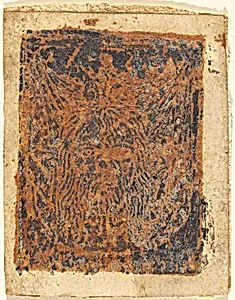
Nestled in the National Gallery of Art's Rosen Collection, *The Sudarium* is delicate paste print from c. 1480, created by an anonymous German artist of the 15th century. Measuring just 4.6 × 3.6 cm, this tiny depicts the Sudarium of Veronica—the legendary cloth said to bear the miraculous image of Christ's face, a powerful symbol of faith during the late Middle Ages. Such intimate devotional images were cherished by pilgrims and the faithful, portable reminders of divine presence. What makes this piece extraordinary is its medium: paste print, a rare and experimental technique pioneered in Germany around the 1470s. Artists applied moist, pigmented clay paste through stencils onto damp paper, creating textured, relief-like color images that mimic sculpture in miniature. Predating modern color printing, these fragile works—few survive today—highlight the ingenuity of late Gothic printmakers bridging handmade illumination and mechanical reproduction. In the turbulent context of 15th-century Europe, amid religious fervor and the dawn of the printing press, *The Sudarium* embodies spiritual solace and artistic innovation. Its survival offers a window into how everyday believers connected with sacred stories through accessible, vibrant art.
About the Artist
German 15th Century · 1400–1500
**German 15th Century** The designation "German 15th Century" encompasses a collective of anonymous artists active in the late medieval and early Renaissance periods in Germany, primarily known through their contributions to early printmaking and panel painting. These creators emerged during a transformative era when woodcuts and engravings began democratizing religious imagery, bridging the Goth...