
Unknown Saint
c. 1480
Medium
paste print
Dimensions
sheet: 5.5 × 5.1 cm (2 3/16 × 2 in.)
Classification
Department
CG-E
Museum
National Gallery of Art, Washington, D.C.
Credit
Rosenwald Collection
Accession Number
1943.3.792
Rights
Public Domain
Art Historical Context
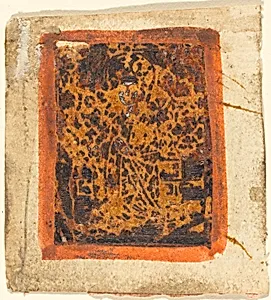
Nestled in the National Gallery of Art's Rosenwald Collection, *Unknown Saint* is a paste print created by an anonymous German artist around 1480. Measuring just 5.5 × 5.1 cm, this tiny work from the Prints department (CG-E) captures a holy figure in a style typical of late 15th-century German devotional art, bridging Gothic piety and emerging Renaissance naturalism. Paste prints, a short-lived innovation of the era, achieved vivid color by layering and pasting translucent colored papers onto a black-line woodcut base—mimicking the effects of illuminated manuscripts or panel paintings without pigments. This technique, flourishing in southern Germany circa 1470–1510, democratized colorful religious imagery, making it affordable for pilgrims and the devout. Though the saint's identity remains unknown, the artwork reflects the era's intense cult of saints, who interceded in daily life amid plagues and wars. Its miniature scale suggests intimate use, perhaps as a portable prayer aid or altar accessory, highlighting how printmaking revolutionized access to sacred art during the cusp of the Reformation. A charming survivor of early graphic experimentation!
About the Artist
German 15th Century · 1400–1500
**German 15th Century** The designation "German 15th Century" encompasses a collective of anonymous artists active in the late medieval and early Renaissance periods in Germany, primarily known through their contributions to early printmaking and panel painting. These creators emerged during a transformative era when woodcuts and engravings began democratizing religious imagery, bridging the Goth...