
Tile
Unknown Artist
late 15th century
Medium
Stonepaste; polychrome painted under transparent glaze
Dimensions
H. 7 7/8 in. (20 cm) W. 7 7/8 in. (20 cm)
Classification
Ceramics-Tiles
Department
Islamic Art
Museum
Metropolitan Museum of Art, New York, NY
Credit
Purchase, Elizabeth S. Ettinghausen Gift, in memory of Richard Ettinghausen, 2008
Accession Number
2008.461
Rights
Public Domain
Art Historical Context
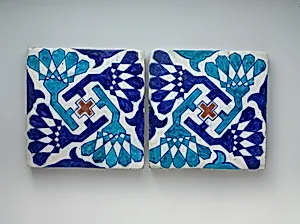
This exquisite square tile, crafted by an unknown artist in the 15th century, the pinnacle of Islamic ceramic artistry. Housed in the Metropolitan Museum of Art's Department Islamic Art, it measures a modest 7⅞ x 7⅞ inches (20 x 20 cm) yet carries the grandeur of grand architectural ensembles. Acquired through the Elizabeth S. Ettinghausen in memory of Richard Etthausen in 2008, it reflects the enduring legacy of tiles in adorning mosques, madrasas, and palaces across the Islamic world. Made from stonepaste—a composite of quartz, clay, and glass frit developed by Islamic potters to mimic Chinese porcelain—the tile features vibrant polychrome painting under a transparent glaze. This underglaze technique ensured durability and luminosity, allowing bold colors to shine through while protecting the surface from wear. Such innovations in the late medieval period highlighted technical mastery, blending functionality with aesthetic splendor in public and sacred spaces. In Islamic art, tiles like this served both decorative and protective roles, creating intricate patterns that evoked paradise gardens or geometric abstractions symbolizing divine order. Though its precise origin remains mysterious, this piece invites visitors to marvel at the anonymous genius behind centuries of tiled splendor.