
Tile
Unknown Artist
late 15th century
Medium
Stonepaste; polychrome painted under transparent glaze
Dimensions
H. 7 7/8 in. (20 cm) W. 7 7/8 in. (20 cm)
Classification
Ceramics-Tiles
Department
Islamic Art
Museum
Metropolitan Museum of Art, New York, NY
Credit
The Camille M. Lownds Fund, 2008
Accession Number
2008.462
Rights
Public Domain
Art Historical Context
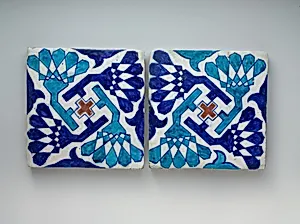
This exquisite square tile, crafted by an unknown artist in the 15th century, the pinnacle of Islamic ceramic artistry. Measuring a modest 7⅞ inches on each side, it is made of stonepaste—a durable, fine-grained body developed in the Islamic world around the 10th century to mimic Chinese porcelain. The surface features polychrome painting under a transparent glaze, a sophisticated technique that fires vibrant mineral-based colors like cobalt blue, turquoise, and manganese purple into the glassy layer, ensuring lasting luminosity and resistance to wear. In the Islamic art tradition, such tiles held profound cultural and architectural significance, often adorning mosques, palaces, and madrasas to create shimmering mihrab niches or expansive dado panels. Dating to the late 15th century—a golden age bridging Timurid and early Safavid influences in Persia—this tile reflects the era's mastery of geometric and floral motifs, symbolizing paradise gardens and divine order. Its underglaze painting allowed for intricate designs that played with light, evoking spiritual transcendence. Acquired through The Camille M. Lownds Fund in 2008, this tile now graces the Metropolitan Museum of Art's Islamic Art department, inviting visitors to appreciate the anonymous genius behind everyday splendor turned eternal.