
Tile Panel
Unknown Artist
18th century
Medium
Stonepaste; painted and glazed
Dimensions
Ht. 27 in. (68.6 cm) W. 33 in. (83.8 cm) Wt. 68 lbs. (30.8 kg)
Classification
Ceramics-Tiles
Department
Islamic Art
Museum
Metropolitan Museum of Art, New York, NY
Credit
Rogers Fund, 1906
Accession Number
06.1237
Rights
Public Domain
Tags
Art Historical Context
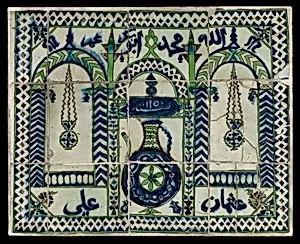
This stunning 18th-century Tile, housed in the Metropolitan Museum of Art's Islamic Art Department, exemplifies the exquisite ceramic artistry of the Islamic world. Crafted from stonepaste—a fine, white fritware body prized for its ability to hold intricate details and vibrant glazes—this panel measures 27 inches high and 33 inches wide, a substantial 68 pounds. Acquired through the Rogers Fund in 6, it showcases motifs of ewers and lamps, symbolizing hospitality, abundance, and illumination in Islamic culture. The technique of painting under a transparent glaze allowed artisans to achieve luminous blues, turquoise, and floral patterns typical of Ottoman or Persian workshops during this period. Stonepaste tiles like this were revolutionary, mimicking porcelain's finesse while enabling large-scale production for architectural embellishment. These panels adorned mosques, palaces, and baths, transforming spaces into shimmering paradises that reflected divine light and earthly splendor. Though the artist remains unknown, the work highlights the anonymous mastery of Islamic ceramicists, blending functionality with profound aesthetic beauty for visitors to admire today.