
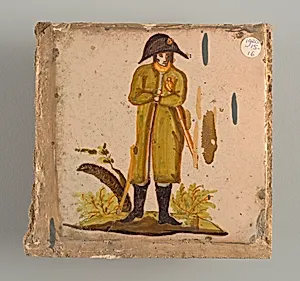
Tile
late 18th–early 19th century
Medium
tiles
Classification
tiles
Department
Smithsonian Collection
Museum
Smithsonian American Art Museum
Credit
Gift of Eleanor and Sarah Hewitt
Accession Number
1920-15-16
Rights
Public Domain
About this artwork
Research in Progress
Art Historical Context
This enigmatic tile, dating to the late 18th or early 19th century exemplifies the utilitarian yet artistic craft of ceramic tiling during America's early republic era. Produced as part of the medium's heyday, when tiles adorned fireplaces, hearths, and architectural interiors, it reflects the period's blend of functionality and emerging decorative sophistication. Though the artist remains unknown, such pieces were often crafted by skilled potters influenced by European traditions, adapting them to American tastes amid growing industrialization. Housed in the Smithsonian American Art Museum's collection, this tile was generously gifted by Eleanor and Sarah Hewitt, pioneering collectors of design objects who helped establish the Cooper Hewitt, Smithsonian Design Museum. Its classification highlights the importance of tiles in everyday American life, serving both practical heat-resistant purposes and aesthetic ones, often featuring motifs inspired by nature or classical motifs. Currently under research, this artifact invites visitors to ponder the anonymous hands behind early American decorative arts, reminding us how humble objects preserve slices of history. A testament to ongoing scholarly discovery, it underscores the Smithsonian's commitment to uncovering the stories embedded in our material past.
About the Artist
Unknown
The artist designated as "Unknown" in our virtual museum's collection exemplifies a poignant chapter in art history: creators whose identities have faded into obscurity despite the enduring power of their work. With only one known artwork attributed to them in our holdings, this figure represents countless anonymous hands that shaped visual culture across centuries. Museums worldwide, including th...