
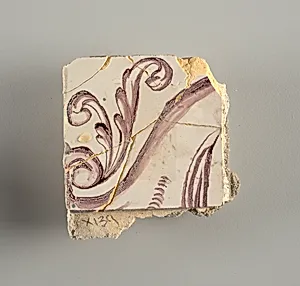
Tile wall facing
ca. 1725
Classification
tiles
Department
Smithsonian Collection
Museum
Smithsonian American Art Museum
Credit
Gift of William Randolph Hearst
Accession Number
1926-43-4-139
Rights
Public Domain
About this artwork
Research in Progress
Art Historical Context
This exquisite *Tile Wall Facing*, dating to around 1725, exemplifies the decorative tilework that adorned early 18th-century interiors, likely serving as a striking architectural feature in a grand home or public space. Classified simply as "tiles" within the Smithsonian American Art Museum's collection, its medium awaits further research, but such pieces were typically glazed ceramics valued for their durability and vibrant designs. Crafted by an unknown artist, it reflects the era's craftsmanship, when tiles imported from Europe—often Dutch delftware or English tin-glazed earthenware—enhanced American colonial architecture with colorful motifs of landscapes, figures, or florals. Historically, tile wall facings from this period held both practical and aesthetic significance, protecting surfaces from fire and soot while elevating domestic spaces to artistic statements. In the American context of the 1720s, amid growing prosperity in the colonies, such installations symbolized wealth and cultural sophistication, bridging Old World traditions with New World ambitions. A generous gift from newspaper magnate and avid collector William Randolph Hearst, this artifact entered the Smithsonian Collection, underscoring Hearst's passion for historical treasures. With research still in progress, it invites visitors to ponder its untold stories—perhaps uncovering origins tied to transatlantic trade or forgotten artisans. A testament to enduring craftsmanship, it captivates with its mysterious allure.
About the Artist
Unknown
The artist designated as "Unknown" in our virtual museum's collection exemplifies a poignant chapter in art history: creators whose identities have faded into obscurity despite the enduring power of their work. With only one known artwork attributed to them in our holdings, this figure represents countless anonymous hands that shaped visual culture across centuries. Museums worldwide, including th...