
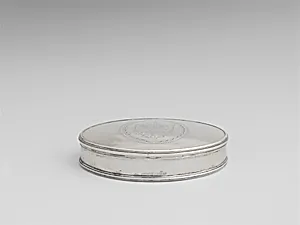
Tobacco Box
ca. 1730–40
Medium
Silver
Dimensions
Overall: 1 x 4 1/2 x 3 3/8 in. (2.5 x 11.4 x 8.6 cm); 7 oz. 6 dwt. (227.4 g) Body: 4 oz. 6 dwt. (133.7 g) Cover: 3 oz. (93.7 g)
Classification
Box
Culture
American
Department
The American Wing
Museum
Metropolitan Museum of Art, New York, NY
Credit
Bequest of Alphonso T. Clearwater, 1933
Accession Number
33.120.138a, b
Rights
Public Domain
Tags
Art Historical Context
This elegant silver tobacco box, crafted by American silversmith Samuel Burr around 1730–0, reflects the refined tastes of colonial during the early eighteenth century. Measuring just over four inches wide, the compact form was designed to hold snuff or pipe tobacco—a valuable commodity in the colonies. Its gleaming surface and engraved coat of arms suggest it served not only a practical purpose but also as a mark of status and identity for its original owner. Burrill’s work exemplifies the high level of craftsmanship found in early American silver. Working in a period when silversmiths combined functionality with decorative flair, he likely shaped the box from hammered sheets of silver before adding the heraldic engraving that personalizes the piece. Such objects were often passed down as heirlooms, their weight and material underscoring both wealth and taste. Today in the Metropolitan Museum’s American Wing, the box offers visitors a tangible connection to colonial daily life and the growing sophistication of American decorative arts before the Revolution.